Apple Silicon vs Intel: A Real-World Performance Comparison for Developers
Since Apple’s transition from Intel to its own Silicon chips, the developer community has been evaluating whether the performance gains justify the switch. After extensive real-world testing, here’s what you need to know.
Raw Performance Numbers
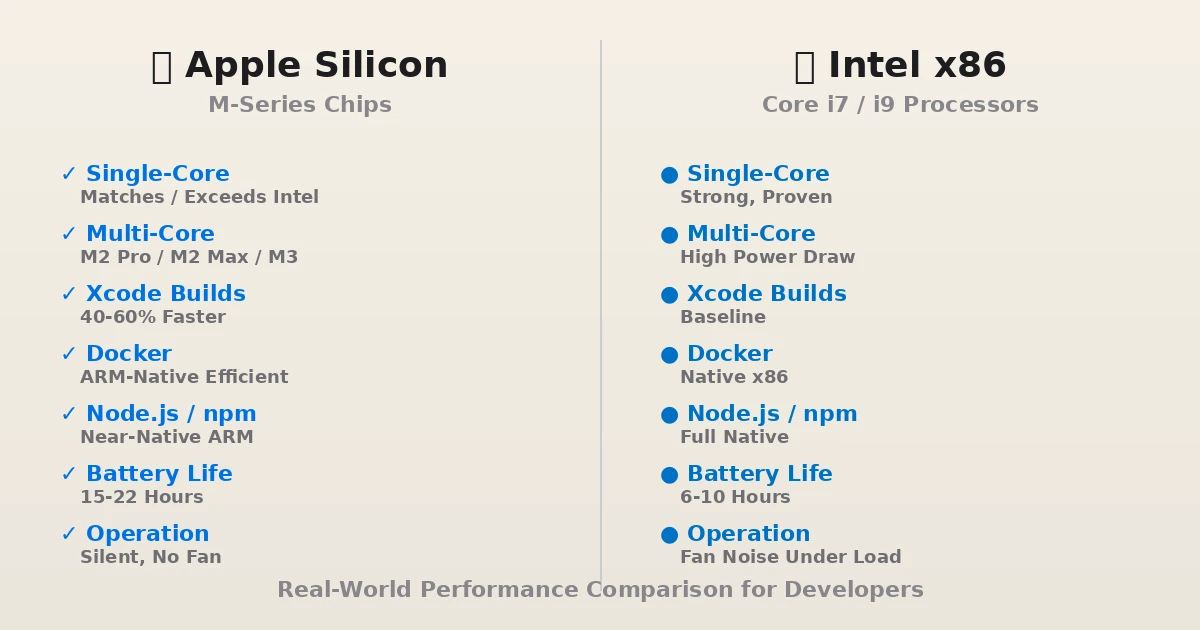
The M-series chips deliver impressive single-core performance that consistently matches or exceeds Intel’s best. Multi-core performance has caught up significantly with the M2 Pro, M2 Max, and M3 series chips.
Development Workloads
For common development tasks — compiling code, running Docker containers, and managing local servers — Apple Silicon Macs offer tangible benefits:
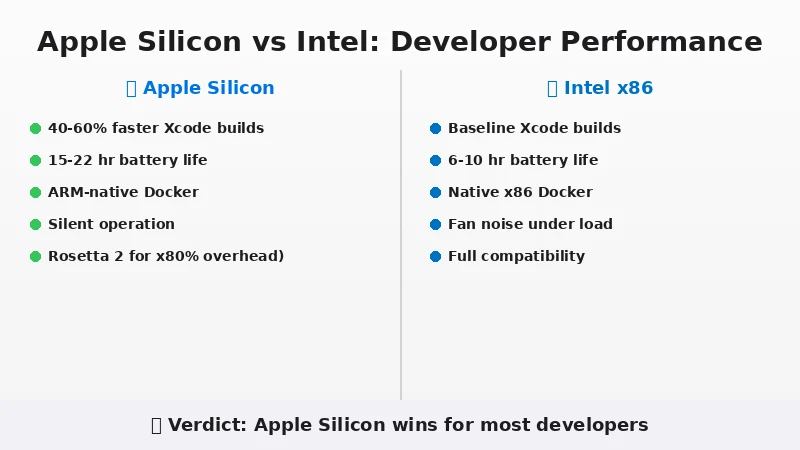
- Xcode builds: 40-60% faster on M2 Pro vs Intel i9 MacBook Pro
- Docker: ARM-native containers run efficiently; x86 containers use Rosetta 2 with ~20% overhead
- Node.js/npm: Near-native performance with ARM builds of Node 18+
- Homebrew: Fully ARM-native since early 2023
Battery Life Impact
Perhaps the most dramatic improvement: Apple Silicon MacBooks deliver 15-22 hours of real-world battery life under development workloads, compared to 6-10 hours on Intel models.
Considerations Before Switching
Some tools still have compatibility issues. Check your critical dependencies — especially kernel extensions, virtualization software, and niche development tools — before migrating.
Verdict
For most developers, Apple Silicon is the clear winner. The combination of raw performance, exceptional battery life, and silent operation makes it the best development platform available today.




Leave your response!